At a glance
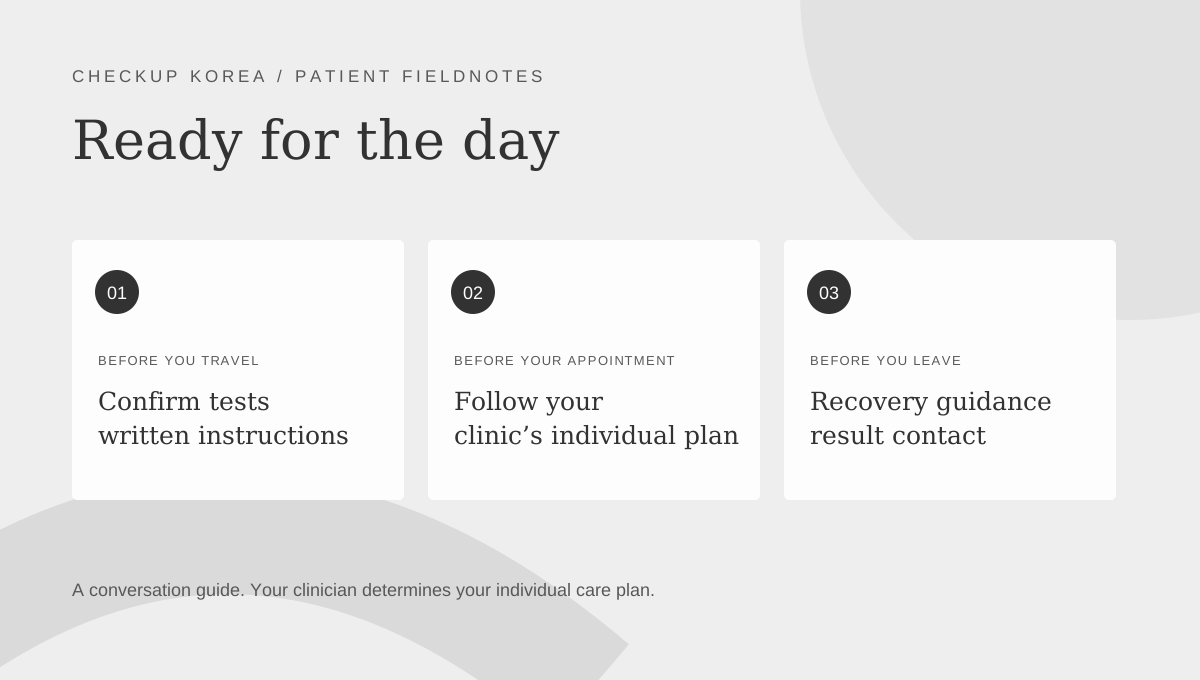
Prepare using the clinic’s written instructions for your confirmed tests and medical history. Check medicine advice, fasting times in Korea local time, any bowel preparation and escort requirements. Keep your booking details and previous records accessible, and allow time for recovery and results.
Prepare for the tests you have actually booked
The safest preparation plan is the one issued by your clinic for your confirmed examinations and medical history. A general internet fasting rule cannot replace it, especially when a visit combines blood tests, imaging and endoscopy. Before travelling, obtain a written schedule that tells you what to do, when to do it and whom to contact if something is unclear. Read the instructions while there is still time to ask questions.
This guide helps you organise that conversation. It does not prescribe a bowel preparation, tell you to stop medicines or decide when you can fly after a procedure. Those decisions belong to your treating team. Your part is to give them complete information, arrange the practical support they request and keep the instructions accessible throughout the visit. A well-prepared appointment starts several steps before you reach the clinic reception.
Confirm the appointment rather than only the enquiry
Check that you have an actual booking with a date, arrival time, exact branch address and agreed list of examinations. A message acknowledging your enquiry is not necessarily an appointment confirmation. Ask whether there is a separate consultation before testing and whether any items might change after the clinician reviews your history. Save the clinic's name and address in both English and Korean for travel purposes.
Make one page containing the booking reference, contact method, map location and expected payment arrangements. Include any deposit or cancellation terms supplied by the clinic. If several family members are attending, keep separate names and test lists so that instructions do not become mixed. Share practical travel details with a companion, but avoid putting sensitive medical records into a public itinerary or a group chat that does not need them.
Send a complete medicine and health history
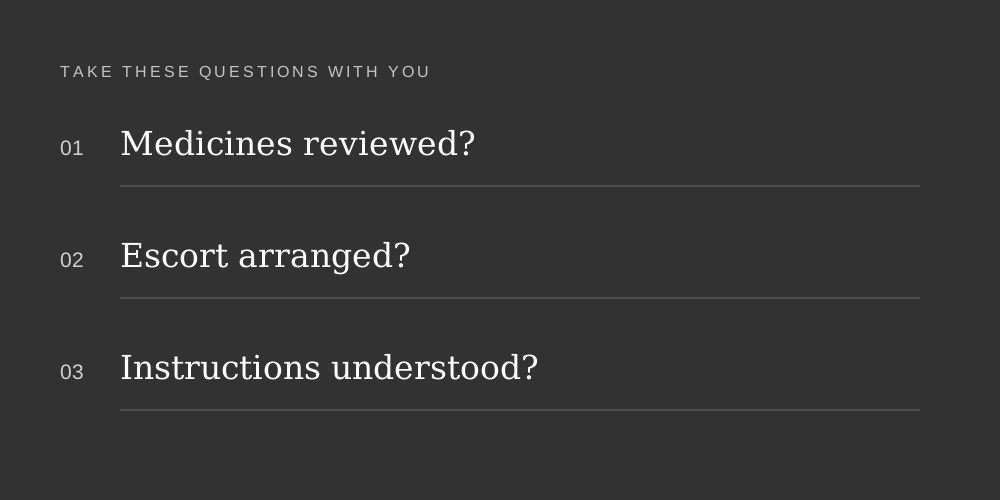
Tell the clinical team about prescription medicines, over-the-counter products, vitamins and supplements, as well as allergies and previous problems with sedation. Use the medicine's generic name where possible and include the dose and usual timing. Photographs of labelled packaging can help when brand names differ between countries. Explain existing conditions and any recent illness instead of assuming that the screening questionnaire will cover every relevant detail.
NIDDK advises discussing medicines and health problems before endoscopy. Some people need specific changes to their normal routine, but you should not stop or adjust treatment on your own. Ask the clinic for written, medicine-by-medicine instructions when changes are necessary. If advice from different clinicians appears inconsistent, ask them to clarify the plan. Do not choose between conflicting instructions simply because one is easier to fit around travel.
Turn fasting advice into a clear timetable
Fasting requirements depend on the examination. For certain blood tests, plain water may be allowed, while an endoscopy or combined appointment can have different restrictions. MedlinePlus advises following the ordering clinician's instructions and not fasting unless told to do so. Ask for the exact stop times for food, liquids and any other restricted items, linked to your appointment time rather than an ambiguous phrase such as the night before.
Write the timetable using Korea local time. If you are arriving from another time zone, check the conversion before departure and again after landing. Set reminders only after you understand the instructions. If you accidentally eat or drink something outside the plan, tell the clinic what it was and when. The team should decide whether the visit can proceed, needs adjustment or must be rearranged; hiding the mistake makes that assessment harder.
Plan bowel preparation around access to a bathroom
Colonoscopy requires bowel preparation so the clinician can see the bowel lining. NIDDK describes written dietary and laxative instructions, with the preparation causing frequent bowel movements. Follow the particular product and schedule prescribed for you rather than borrowing another person's instructions. If you cannot complete it or have troubling effects, use the clinic's advice route instead of improvising extra doses.
For a traveller, the practical requirement is a reliable place to stay with ready bathroom access. Avoid putting a sightseeing trip, a long transfer or a hotel change into the preparation period. Confirm how you will obtain the prescribed preparation, whether collection is needed and whether the instructions arrive before you leave home. Keep the package and instruction sheet together. If the accommodation has shared facilities, consider whether the arrangement will be workable and private.
Make sedation arrangements before the day
If sedation is planned, ask what support is required after discharge. NHS endoscopy guidance describes restrictions after sedation, including driving, and the need for another person to accompany or remain with you in relevant circumstances. Your own clinic should state its discharge requirements. Do not assume that booking a taxi alone satisfies a requirement for a responsible adult escort.
Ask a companion whether they can commit to the whole discharge and recovery period, not just meet you briefly outside reception. Confirm where you will rest and how the companion can contact the clinic. Keep the remainder of the day flexible. If you are travelling alone, raise this while arranging the appointment so the provider can explain available options. Do not arrive expecting the team to invent an escort arrangement at the last minute.
Understand what might happen during endoscopy
The consent discussion should cover the planned examination, sedation options where available, material risks and any additional procedure that might be considered. Ask whether a biopsy or polyp removal could take place, how that decision is made and how extra charges are handled. You can ask for an explanation before signing. Request an interpreter if you cannot confidently understand the information being presented.
Colonoscopy and upper endoscopy carry risks including bleeding, perforation and reactions to sedation. Tissue samples can also mean that the final answer is not available immediately. These points affect travel planning as well as consent. Ask how the clinic would manage a complication, where you would be referred if necessary, and what information you should carry away. A useful answer identifies the process rather than simply promising that complications are unlikely.
Leave room around travel and activities
Tell the clinician your flight date and any onward travel before agreeing to a procedure. Ask whether the planned examination or a possible intervention could change those arrangements. There is no single travel interval that this guide can safely apply to every patient, procedure or finding. Obtain individual advice and ask whether it will be updated after the examination based on what actually happened.
When possible, avoid making the medical visit the final tightly scheduled event before departure. Leave practical space for recovery instructions, an additional conversation or collection of records. Ask the clinic how an unexpected result would affect the plan. Check your airline and insurer's requirements directly if a medical change affects travel. A flexible itinerary does not replace medical clearance, but it can make it easier to follow advice without being forced into a rushed decision.
Pack for an appointment, not just a holiday
Bring identification requested by the clinic, your booking details, previous relevant reports and an up-to-date medicine list. Carry glasses or other communication aids you use and make sure your phone can receive the clinic's messages in Korea. Keep a charger or power bank available. If the clinic has supplied forms, complete them carefully and leave uncertain answers for discussion rather than guessing.
Keep records available offline in case mobile reception or a login fails. Organise them by date and type so that you can find an earlier scan report or test result quickly. If someone will help you communicate, decide in advance what you authorise them to hear or receive. Ask the clinic how it handles consent for sharing results with a companion. Good organisation should make the visit easier without removing your control over personal information.
Ask about the full cost before any additions
Request a written breakdown of the planned services and possible extras. For endoscopy, useful questions concern sedation, biopsy processing, polyp removal, medicines and follow-up. Ask how the team will obtain your agreement for an additional charge where practical. Keep a copy of the agreed quotation and payment receipts. Do not assume a travel or domestic insurance policy covers planned screening, optional tests or complications without checking the policy terms.
The CDC's medical tourism guidance recommends discussing follow-up arrangements and understanding coverage before travelling. Apply that principle to the actual plan you are buying: who pays for additional assessment, where it can take place and what paperwork is needed? A low package headline becomes less useful if essential parts of the care pathway are unclear. Resolve those questions while you still have time to compare options or adjust your schedule.
A relevant partner for an endoscopy enquiry
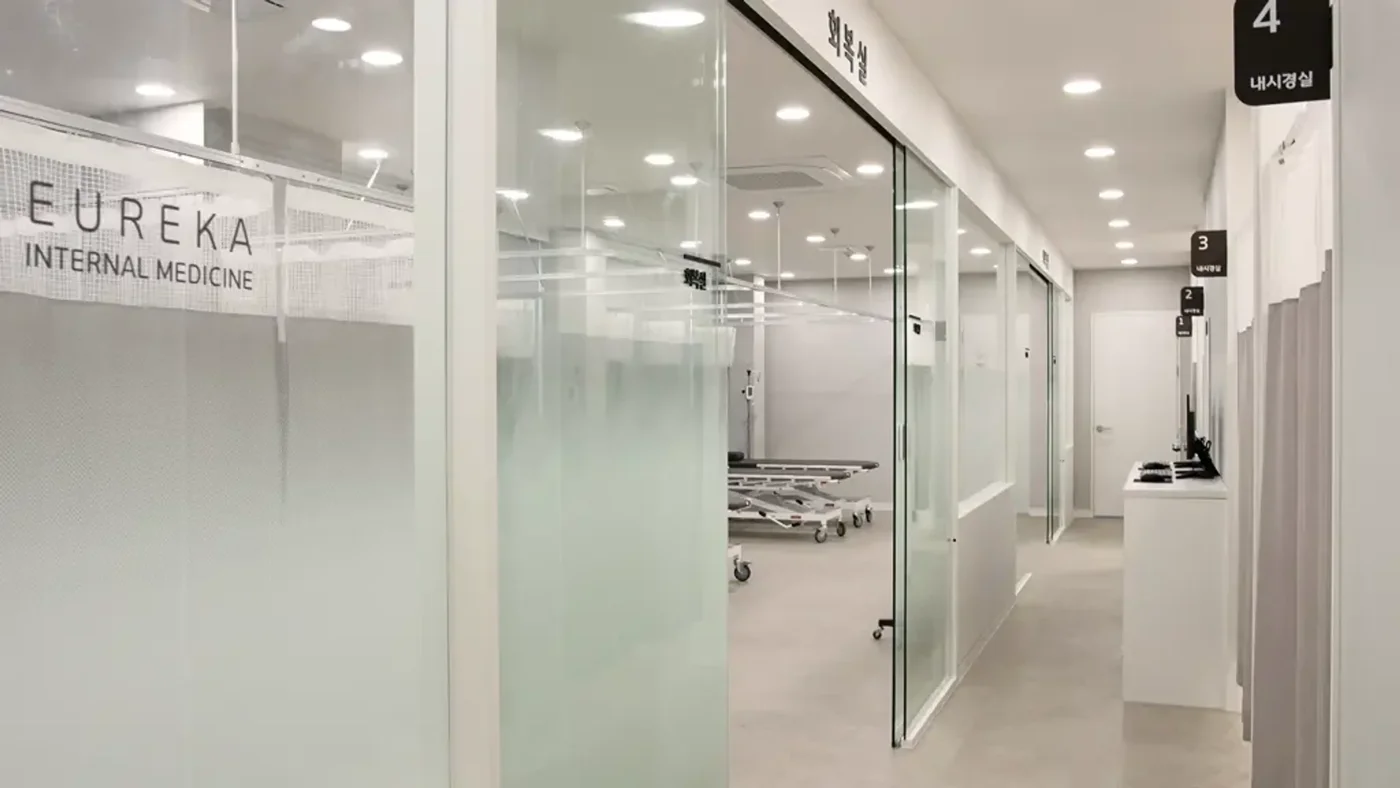
Eureka Internal Medicine Clinic / Health Checkup Centre in Suwon lists gastroscopy and colonoscopy on its international website. Its doctor page describes Dr. Suk-hwan In's internal medicine and gastroenterology endoscopy background. The clinic also advertises polyp removal, so an enquiry should cover whether it could be appropriate in your case and how consent, charges and aftercare would be organised.
Use the linked Eureka profile to review the service and request its own preparation instructions for your confirmed appointment. Ask which physician will perform the examination and what escort arrangements are required. The clinic's PB placement is commercial promotion, not an endorsement of one procedure or doctor over another. Its published service information does not establish that every visitor is suitable for endoscopy or that a particular intervention will be possible.
Leave with instructions you can use
Before discharge, ask for a written account of what was performed, any immediate findings, medicines or restrictions, and symptoms that require urgent care. Confirm the number or channel to use for a non-urgent question and where to seek help outside normal hours. Ask the team to explain anything you cannot understand. If sedation has affected your recall, your authorised companion can help keep the instructions and note the plan.
After endoscopy, severe or worsening pain, breathing difficulty, heavy bleeding or vomiting blood warrants urgent medical assessment rather than waiting for a routine results message. Follow the treating team's specific warning signs as well. Before leaving, also confirm when any pathology result is expected and who will contact you. The appointment is not fully organised until preparation, recovery and the result pathway each have a clear next step.
Common questions
How many hours should I fast before my checkup?
Use the timing provided by the clinic for your exact examinations. Blood tests, endoscopy and combined appointments can have different food and fluid restrictions. Ask for explicit stop times instead of applying a generic rule.
Should I stop my medicines before endoscopy?
Do not stop or change prescription treatment on your own. Give the clinic your medicine names, doses and usual timing, then request individual written instructions and clarification of any conflicting advice.
Partner centers to explore
These centers list related services. Confirm the exact examination and appointment with the center.
 Suwon · Yeongtong
Eureka Internal Medicine & Health Checkup Centre
Internal medicine, endoscopy and imaging in Suwon, with four named internal medicine specialists.

Dr. Suk-hwan In
Eureka Internal Medicine & Health Checkup Centre
View profile ↗Sources & further reading
Explore the partner centers
Use the directory to review relevant services and medical teams, then confirm the details directly with the provider.
Find a center