At a glance
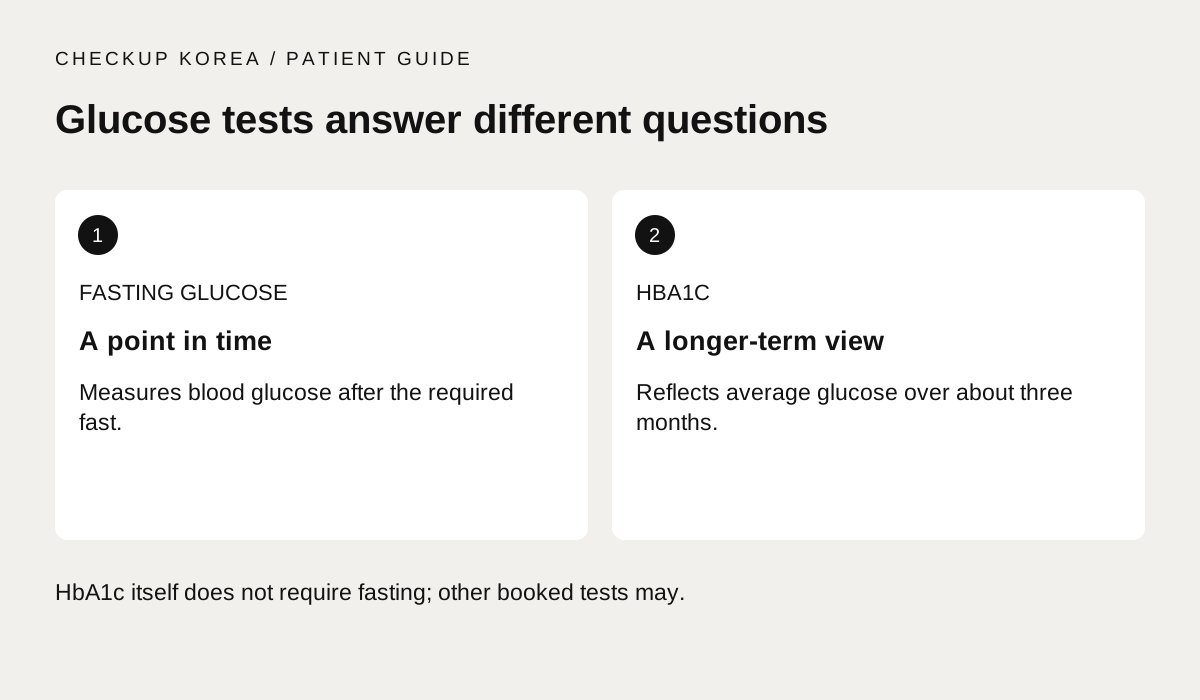
HbA1c reflects average blood sugar over about three months and does not itself require fasting. Fasting plasma glucose measures your level after a fast. Either may be used for diabetes screening; your history, possible test limitations and any abnormal findings determine whether another test is needed.
Two tests, two views of blood sugar
HbA1c and fasting plasma glucose are both used in diabetes assessment, but they describe different things. HbA1c reflects average blood sugar over roughly the previous three months and does not itself require fasting. Fasting plasma glucose measures the glucose in your blood at the time the sample is taken after a fast. Neither is automatically the better choice for every patient.
For a checkup in Korea, start by asking which test is actually included and why it suits your circumstances. A package labelled blood sugar may not tell you whether HbA1c is part of the offer. Your clinician may choose one test, use both, or recommend another assessment. The useful outcome is a result you understand and a clear plan if it needs confirmation.
Sources: NIDDK: The A1C test and diabetes; NIDDK: Diabetes tests and diagnosis
Screening, symptoms and monitoring are different appointments
Screening means testing before symptoms appear. If you have increased thirst, frequent urination, unexplained weight loss or blurred vision, describe those symptoms when arranging care rather than requesting only a routine screening package. If vomiting is accompanied by difficulty breathing, or you feel seriously unwell, seek urgent medical assessment instead of waiting for a scheduled checkup. Diabetes-related illness can require prompt treatment.
If you already have diabetes, say that at booking. Bring your treatment plan and recent results so the appointment can focus on monitoring rather than a first diagnosis. Explain whether you want a one-time opinion during travel or ongoing care in Korea. Those are different commitments for both you and the clinic, and a single blood test does not establish an ongoing care arrangement.
Sources: CDC: Symptoms of diabetes; CDC: Diabetic ketoacidosis
What HbA1c measures—and what it cannot show
HbA1c measures glucose attached to haemoglobin, a protein in red blood cells. Because it reflects a longer period, it offers a different perspective from one glucose reading. However, an average does not show every rise or fall during the day. If you already use glucose monitoring, bring that information rather than assuming HbA1c replaces it.
Keep the full laboratory name on your report: HbA1c, A1C and glycated haemoglobin can refer to this test. Ask for the result with its unit and the laboratory interpretation. Do not mistake an estimated average glucose printed alongside HbA1c for a separately measured fasting result. If the report format is unfamiliar, ask the clinician to point out which values were measured and which were calculated.
Sources: NIDDK: The A1C test and diabetes; CDC: A1C testing and factors affecting accuracy
What fasting plasma glucose measures
Fasting plasma glucose, often shortened to FPG, is a laboratory measurement at a particular moment. The usual diagnostic fast is at least eight hours without calories; water is generally allowed for this test alone. A combined checkup may impose other restrictions, so follow the clinic’s written instructions for your whole appointment rather than applying that rule to every examination.
When booking, clarify the scheduled blood-draw time and what counts as breaking the fast. If you ate or drank outside the instructions, report exactly what and when. Do not conceal it to avoid rescheduling. Ask the team whether a different test, a later sample or another appointment is appropriate. Their decision should reflect the actual conditions of the sample, not what the booking form expected.
Sources: NIDDK: Diabetes tests and diagnosis; American Diabetes Association: Diagnosis
Who should discuss screening in Korea?
The Korean Diabetes Association’s 2025 guideline recommends screening all adults from age 35, and adults from age 19 who have one or more risk factors. It recognises fasting glucose, HbA1c and the oral glucose tolerance test as screening methods. These clinical recommendations are not a promise of insurance coverage, a fixed package or a requirement that every visitor receives all three tests.
Bring your previous results and explain relevant family history, prior gestational diabetes, medicines and any earlier advice about elevated glucose. If your home clinician has already recommended a testing schedule, take that plan with you. Ask how the Korean consultation fits into it. Your age alone does not tell the clinic whether you are due for a repeat test or why an earlier result needed attention.
Sources: Korean Diabetes Association: 2025 clinical practice guidelines
How to read the main result categories
For nonpregnant adults, commonly used categories are HbA1c below 5.7%, 5.7–6.4% in the prediabetes range, and 6.5% or above in the diabetes range. Corresponding fasting plasma glucose categories are below 100 mg/dL, 100–125 mg/dL, and 126 mg/dL or above. These are different measurements, not interchangeable numbers.
A diabetes-range result usually needs confirmation when there are no clear symptoms or other unequivocal findings. Ask whether the next step is repeating the same test or using another method, and when that should happen. Do not diagnose yourself from a package report or start treatment without review. Pregnancy uses a different assessment pathway; these general categories should not be used to interpret gestational diabetes testing.
Why the two tests may disagree
An HbA1c result and a fasting glucose result do not always place the same person in the same category. NIDDK notes that someone can have fasting glucose below the prediabetes range while HbA1c is within it. A disagreement deserves interpretation; it does not mean you should keep only the more reassuring result or automatically assume a laboratory mistake.
Bring both reports to one clinician, including dates and preparation details. Ask which result needs clarification and why. If you are leaving Korea soon, discuss whether confirmation can be arranged before departure or with your usual clinician. Avoid repeating tests at several unrelated centres without sharing the earlier findings: the reviewer needs to see the whole sequence to explain what the next test is intended to resolve.
Sources: NIDDK: Recommended tests for identifying prediabetes
When HbA1c may be less reliable
Conditions affecting red blood cells can distort HbA1c. Tell the clinician about anaemia, haemoglobin disorders, recent blood loss or transfusion, pregnancy, and significant kidney or liver disease. The effect depends on the condition and sometimes the testing method; it cannot be corrected simply by applying a standard adjustment yourself. The team may choose a glucose-based assessment instead.
Make this history part of your enquiry, not an afterthought when the result seems unexpected. If you have a previous report about a blood disorder, bring it with your glucose records. List prescription medicines and supplements as well. Do not stop medicines to improve a test result or follow generic internet advice; request individual instructions from the clinician responsible for your care.
Sources: CDC: A1C testing and factors affecting accuracy; MedlinePlus: Hemoglobin A1C test
When a glucose tolerance test may enter the discussion
An oral glucose tolerance test measures glucose before and after a measured glucose drink, with a timed later sample. It asks a different question from an ordinary fasting sample and needs a specific appointment and preparation. The Korean guideline supports further testing by a different method when diabetes is suspected despite an initial result indicating prediabetes.
Ask what uncertainty the additional test would address, how long you need to remain at the clinic, and what preparation applies. Do not arrive with your own sugary drink or treat a home measurement after breakfast as an equivalent test. If an additional appointment is proposed, request its separate scope and fee. You should understand the clinical reason and practical commitment before agreeing.
Sources: NIDDK: Diabetes tests and diagnosis; Korean Diabetes Association: 2025 clinical practice guidelines
If you already have diabetes, ask about your personal target
The cutoffs used to diagnose diabetes are not automatically your treatment targets after diagnosis. Your clinician should interpret HbA1c alongside your treatment and health history. A lower result achieved with treatment does not by itself mean the original diagnosis has disappeared. Do not use a screening category printed on the report as an instruction to reduce or stop medication.
Before a travel appointment, write down the last HbA1c date, the target discussed with your usual clinician and any treatment changes since then. Take the actual prescription list, including timing, rather than a description such as diabetes tablets. Explain what you want the visit to resolve: a result review, a second opinion or continuity while abroad. Ask how any new advice will be reconciled with your existing plan. If the appointment is only a blood draw, arrange who will make the clinical decisions afterward instead of expecting the laboratory report to provide a treatment plan.
Plan the blood draw and quotation
These tests commonly involve a small blood sample from an arm vein. Brief discomfort or a bruise can occur. Tell the staff if you have previously fainted during blood collection or need help understanding the procedure. Ask whether the doctor consultation happens before or after sampling, so you can raise questions before the test list is finalised.
Request an itemised quote naming HbA1c and fasting plasma glucose separately if both are proposed. Clarify whether interpretation, a repeat test, an English report and a follow-up appointment are included. No partner-wide price is established here. Do not assume that a clinic’s general blood-test service includes a particular assay or a same-day result; confirm those details for your appointment.
Sources: MedlinePlus: Hemoglobin A1C test
Listed partners for a focused glucose consultation
Eureka Internal Medicine & Health Checkup Centre in Suwon lists health checkups and chronic disease care. It is relevant if you want to discuss glucose testing within a broader physician-led review. Ask whether HbA1c or fasting glucose is appropriate and available in the proposed visit. Eureka’s PB plan receives promoted placement; that commercial priority is not evidence of superior diabetes care.
Sangdo Woori Internal Medicine in Seoul lists diabetes care and blood testing. Its published profile for Dr. Yoo Du-yeol identifies internal medicine and diabetes management among his services. This makes the clinic a relevant option for a focused consultation about an elevated result or diabetes screening needs. Use its international website to ask about the exact laboratory tests and a consultation with Dr. Yoo. Provider descriptions are self-reported, not independent verification of credentials.
Sources: Sangdo Woori: International clinic website; Sangdo Woori: Dr. Yoo Du-yeol; Eureka: International clinic website
Leave with a test-specific next step
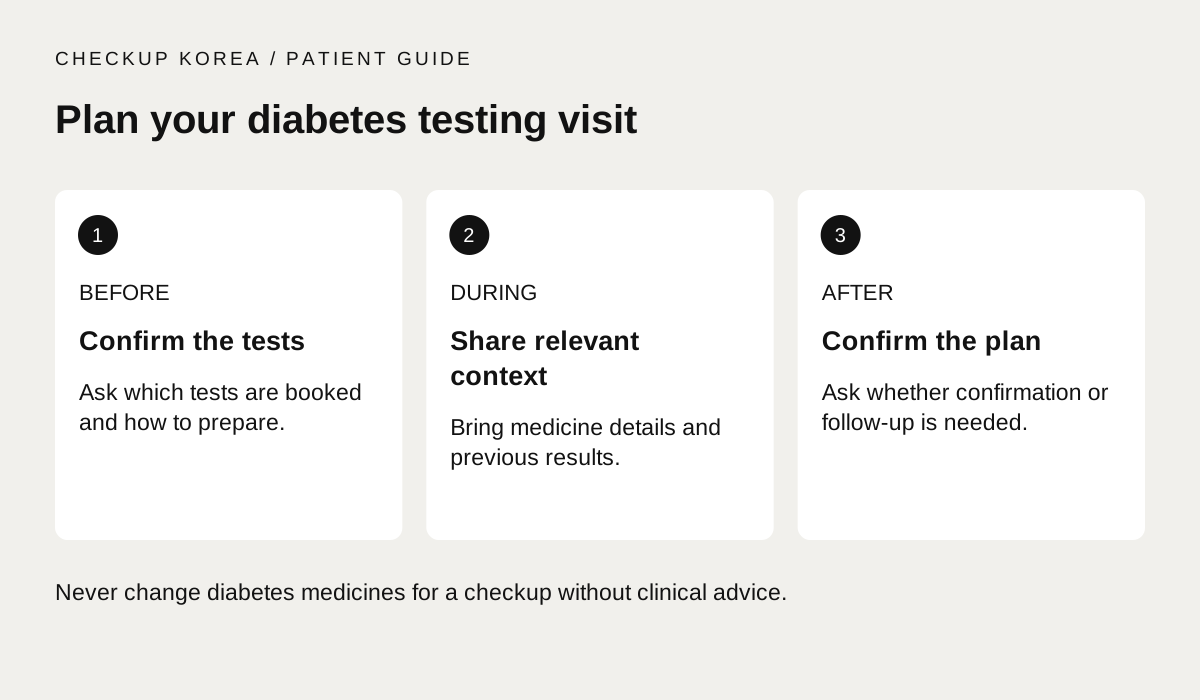
Ask the reviewing clinician to state whether the result is a screening finding, a confirmed diagnosis or monitoring of an existing condition. Record what happens next: another sample, a consultation, a prevention discussion or ongoing treatment review. If further testing is needed, identify who will arrange it and which earlier results must accompany the request.
For an international visit, request the original laboratory report as well as an explanation you understand. Keep the sample date, test name, units and preparation details together. Use our broader results guide for transferring records, while keeping the diabetes decision specific: which finding needs action, why, and by when? That gives your next clinician a usable starting point rather than just a number copied from a checkup summary.
Sources: NIDDK: Recommended tests for identifying prediabetes; Sangdo Woori: Dr. Yoo Du-yeol
Common questions
Do I need to fast for HbA1c?
Not for HbA1c alone. Other tests booked at the same visit may require fasting, so follow the clinic’s written instructions for the combined appointment.
Does an HbA1c of 6.5% prove I have diabetes?
It is in the diabetes diagnostic range, but a clinician usually confirms the result in a person without clear symptoms. Ask what repeat or additional testing is needed.
Why is my fasting glucose normal but HbA1c raised?
The tests reflect different aspects of glucose levels and may identify different people. Discuss both results with a clinician, including any condition affecting HbA1c accuracy.
Can I use a home glucose meter to diagnose diabetes?
No. A home reading can be useful information for your clinician, but it does not replace an appropriate diagnostic blood test and medical assessment.
- Sangdo Woori clinic profile
- Dr. Yoo Du-yeol
- Eureka clinic profile
- Understanding your checkup results
- What a general checkup can tell you
- Cardiovascular risk assessment
Contact the relevant partners
Sangdo Woori international website
Dr. Yoo Du-yeol’s published profile
Partner centers to explore
These centers list related services. Confirm the exact examination and appointment with the center.
 Suwon · Yeongtong
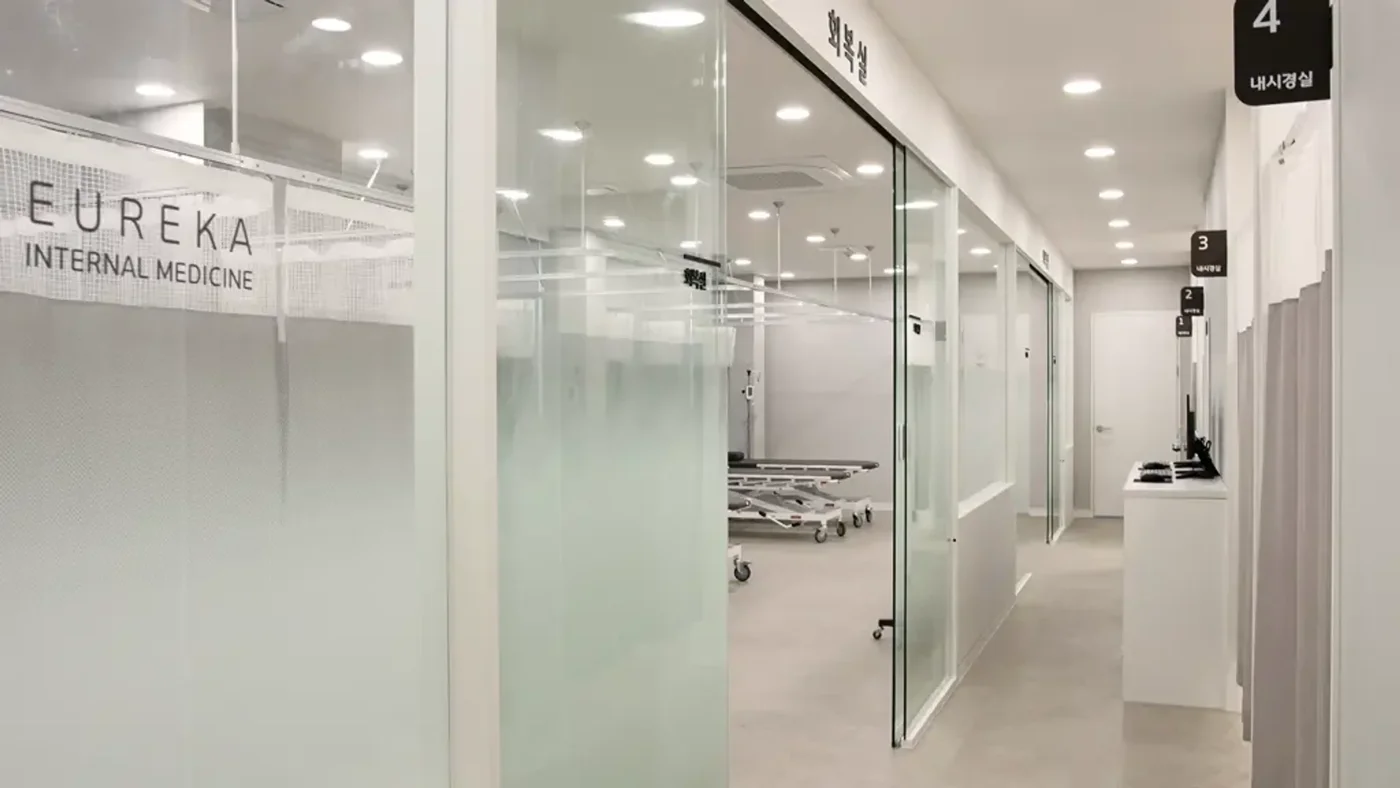
Eureka Internal Medicine & Health Checkup Centre
Internal medicine, endoscopy and imaging in Suwon, with four named internal medicine specialists.
 Seoul · Dongjak
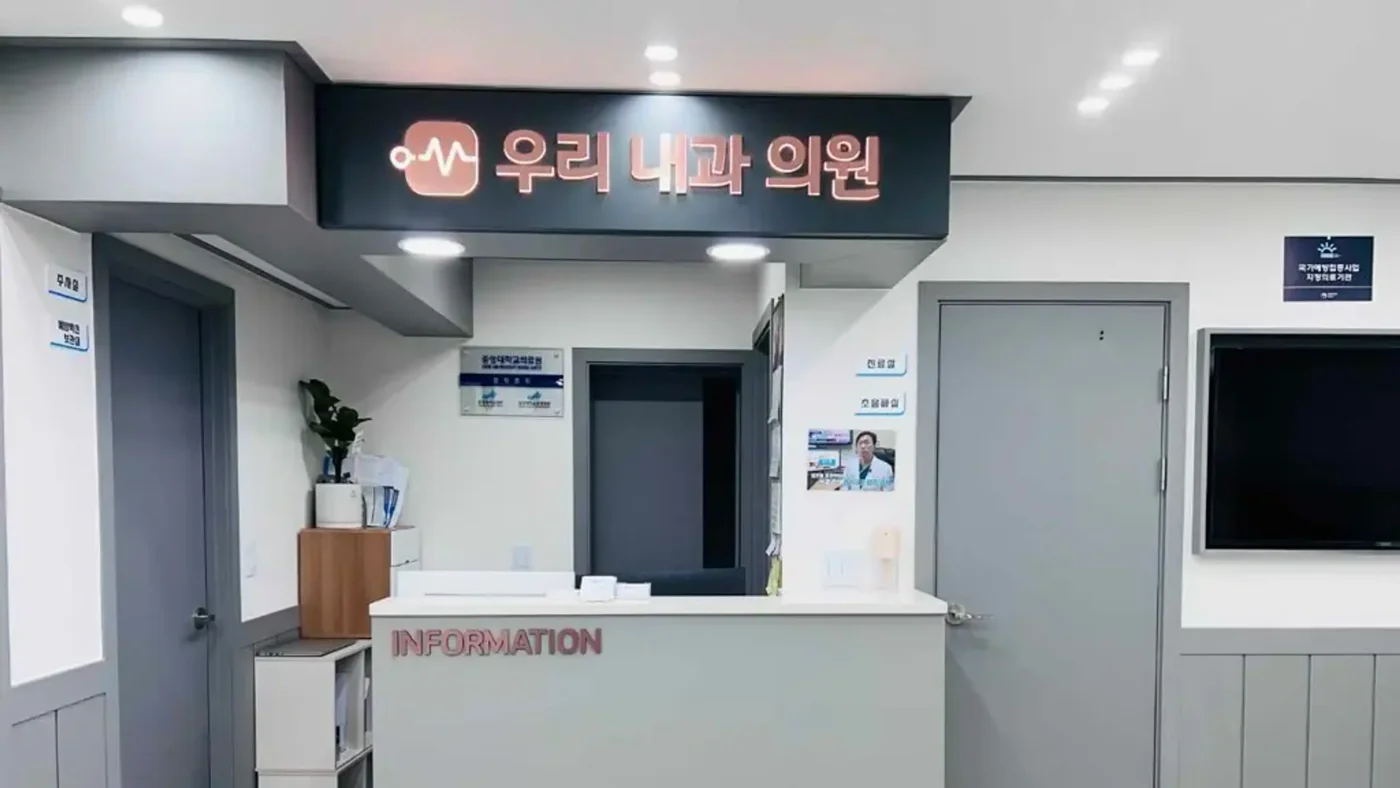
Sangdo Woori Internal Medicine
Internal medicine consultations, blood and urine tests, thyroid assessment and chronic disease monitoring.

Sources & further reading
- NIDDK: The A1C test and diabetes ↗
- NIDDK: Diabetes tests and diagnosis ↗
- Korean Diabetes Association: 2025 clinical practice guidelines ↗
- American Diabetes Association: Diagnosis ↗
- CDC: A1C testing and factors affecting accuracy ↗
- MedlinePlus: Hemoglobin A1C test ↗
- NIDDK: Recommended tests for identifying prediabetes ↗
- CDC: Symptoms of diabetes ↗
- Sangdo Woori: International clinic website ↗
- Sangdo Woori: Dr. Yoo Du-yeol ↗
- Eureka: International clinic website ↗
- CDC: Diabetic ketoacidosis ↗
Explore the partner centers
Use the directory to review relevant services and medical teams, then confirm the details directly with the provider.
Find a center