At a glance
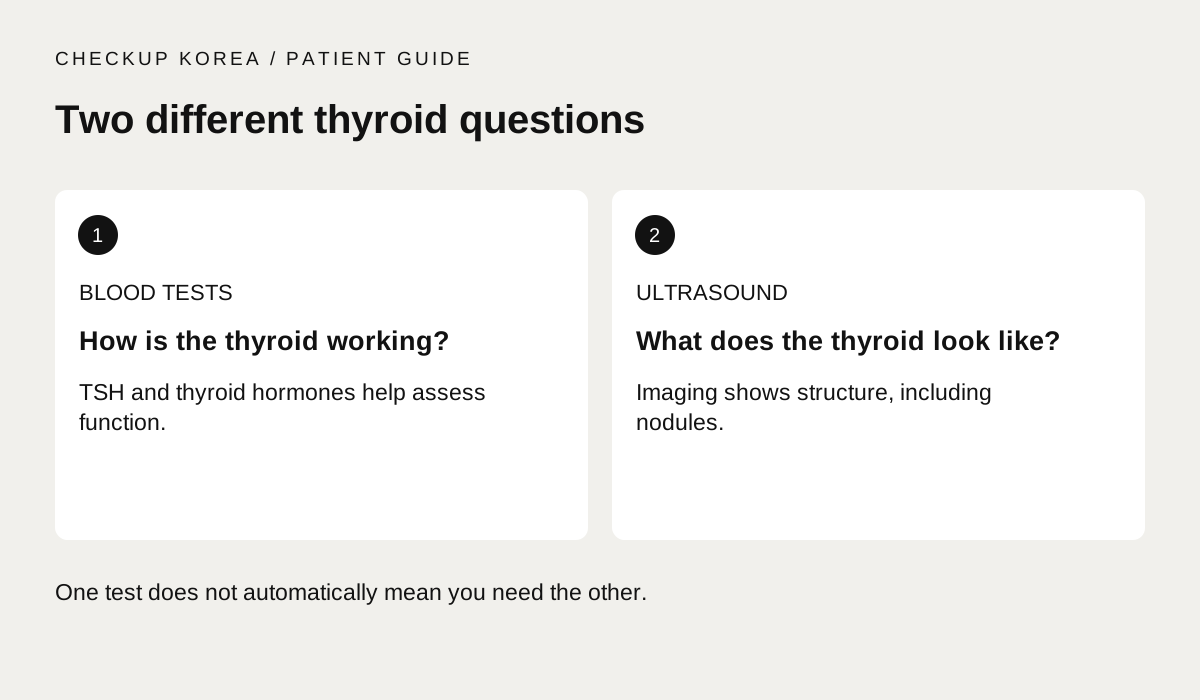
Thyroid blood tests assess hormone function; ultrasound examines the gland’s structure. The right choice depends on symptoms, history and prior findings. They are not interchangeable, and routine ultrasound screening is not automatically beneficial for an adult without symptoms.
Blood tests and ultrasound answer different questions
Thyroid blood tests assess hormone function; a thyroid ultrasound examines the gland’s structure. Neither replaces the other. When arranging a checkup in Korea, start with the question you want answered: whether your thyroid is making an appropriate amount of hormone, whether a neck lump needs assessment, or whether an existing thyroid condition needs follow-up. That question should shape the appointment before you choose a package.
A package may list both tests under “thyroid screening,” making them sound like interchangeable measures of reassurance. They are not. A normal hormone result can coexist with a nodule, and an ultrasound picture cannot establish that hormone levels are normal. This guide explains those differences for adults planning a consultation. It does not set a testing schedule for children, pregnancy, or people already being treated for thyroid cancer.
When contacting a center, describe your situation in a sentence before requesting tests. For example: “I have an earlier thyroid report and want to understand whether anything needs repeating.” That gives the clinician a more useful starting point than asking for the largest thyroid panel.
Sources: American Thyroid Association: Thyroid function tests; KDCA National Health Information Portal: Thyroid blood and urine tests (Korean)
What TSH, free T4 and other blood tests can show
TSH is a signal produced by the pituitary gland that helps regulate thyroid hormone production. Clinicians often start with TSH when assessing thyroid function. Free T4 measures thyroid hormone that is not attached to transport proteins. Interpreting the two together can help clarify a result; the test names describe different measurements, not competing versions of the same test.
T3 testing can help in selected assessments of an overactive thyroid. Thyroid antibody tests can help investigate an autoimmune cause when the clinical picture warrants them. They are not automatically necessary just because a package offers them. Ask which question each additional blood test would answer in your case and whether it would change the next step.
Get the actual laboratory report, including units and the laboratory’s reference ranges. A booking confirmation that says “thyroid test included” is too vague to compare with a previous result. Ask whether the proposed test is TSH alone, TSH with free T4, or a wider panel, and who will explain the findings.
Sources: American Thyroid Association: Thyroid function tests; NIDDK: Thyroid tests
What an ultrasound adds—and what it cannot settle
Thyroid ultrasound uses sound waves to show the gland and nearby structures in the neck. It does not use ionizing radiation. It can help assess a lump, describe a nodule’s appearance and size, and compare a known nodule with earlier imaging. The scan may help a clinician decide whether further investigation is needed.
An ultrasound does not directly measure thyroid hormone production. It also does not turn every visible nodule into a cancer diagnosis. Some findings need no immediate procedure; others require a more detailed discussion. The useful outcome is an interpreted report with a plan, rather than simply being told that the scan found “something.”
If you already have a nodule, bring the earlier report and images where available. Ask the reviewing clinician whether the new examination can be compared with the old one. Keep the date and location of each examination together with its report, so a future clinician can understand what was measured and what follow-up was previously advised.
Sources: RadiologyInfo (ACR/RSNA): Thyroid ultrasound; American Thyroid Association: Thyroid nodules
Feeling well is different from investigating a symptom
Testing a person without symptoms to look for disease is screening. Investigating a new lump or following an established thyroid condition has a different purpose. The US Preventive Services Task Force recommends against thyroid cancer screening in asymptomatic adults because expected harms outweigh benefits. This is a US evidence recommendation, not a statement about Korean insurance coverage or an instruction to ignore a neck symptom.
The same organization finds insufficient evidence to determine the balance of benefits and harms of screening nonpregnant adults without symptoms for thyroid dysfunction. That is a separate question from thyroid cancer screening. An uncertain benefit from universal screening does not mean blood tests are useless when a clinician has a reason to request them.
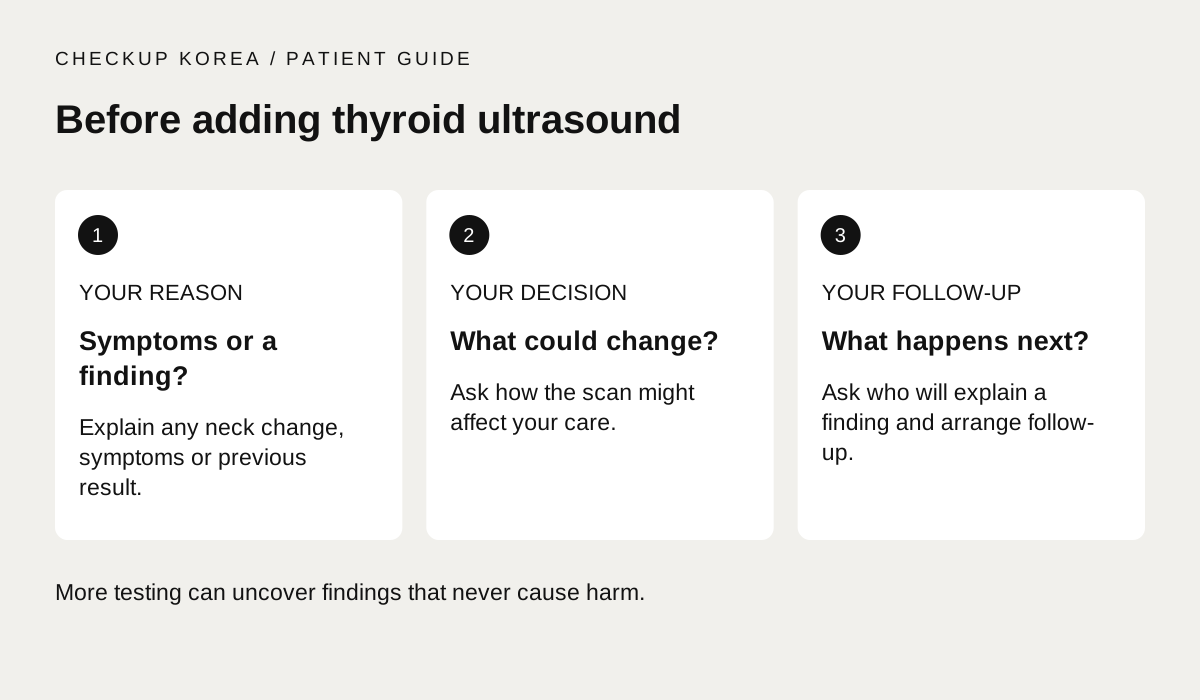
Before accepting an optional thyroid add-on, ask: “What in my symptoms, examination, history or earlier results makes this test useful?” Tell the clinician about previous neck radiation, family thyroid cancer history, or a known inherited condition. A routine package cannot substitute for an individualized discussion of those circumstances.
Sources: USPSTF: Thyroid cancer screening; USPSTF: Thyroid dysfunction screening
If you have a lump or a previous abnormal result
A new neck lump, persistent voice change or swallowing difficulty deserves clinical assessment rather than waiting for a future routine checkup. These symptoms do not establish a thyroid diagnosis. Explain what changed, when it began and whether it is worsening when you request an appointment. Significant breathing difficulty needs urgent care, not an online screening inquiry.
If an earlier blood test was outside its reference range, send the full report instead of describing it only as “high thyroid.” That phrase can mean different things to different people. Include the test name, value, date, medicines and any treatment changes. Ask whether the appointment is for review, repeat testing or a new diagnostic assessment.
For a previously detected nodule, say whether you have had a biopsy and whether anyone recommended a review date. Bring the pathology result if one exists. A clinician will need that context to discuss the next step; a new ultrasound booking alone does not transfer responsibility for the earlier finding.
Sources: KDCA National Health Information Portal: Thyroid blood and urine tests (Korean); American Thyroid Association: Thyroid nodules
Prepare the information that affects interpretation
List prescription medicines, nonprescription products and supplements, including their names and doses. Biotin, often sold in hair or nail supplements, can interfere with some thyroid laboratory measurements. Tell the clinic you take it and ask for instructions appropriate to the laboratory and dose. Do not change prescribed thyroid treatment or stop medicines on your own to prepare for a checkup.
Pregnancy, recent illness and medicines can affect how thyroid results are interpreted. Tell the clinician if you are pregnant or may be pregnant, and mention any established thyroid diagnosis. Ask for individualized preparation instructions if you take thyroid hormone; a generic package message may not answer your medication-timing question.
Thyroid blood testing alone generally does not require fasting, but other tests booked on the same day may. Confirm the instructions for the complete appointment. For ultrasound, ask whether you should avoid neck jewelry and wear clothing that makes the neck accessible. Keep the clinic’s written instructions with your appointment details instead of relying on a general travel checklist.
Sources: American Thyroid Association: Thyroid function tests; KDCA National Health Information Portal: Thyroid blood and urine tests (Korean); RadiologyInfo (ACR/RSNA): Thyroid ultrasound
Read a blood result as a clinical question, not a verdict
An out-of-range result is a reason for interpretation. It does not, by itself, tell you which medicine to start or whether a scan is needed. The clinician may consider symptoms, examination, other laboratory values and whether repeating a measurement would clarify the finding. Ask what is known now and what remains uncertain.
Try three specific questions during the review: “Does this result suggest a hormone-function problem?” “Is another test needed to understand it?” “When should it be reviewed, and by whom?” Write down the answers next to the report. If the recommendation is observation, ask what would change that plan rather than treating observation as an incomplete service.
If you normally receive care outside Korea, request a record that identifies the tests and any recommended follow-up. Confirm whether an English report is available and whether it includes the clinician’s interpretation or only laboratory numbers. Those are different deliverables. Arrange a way to ask about an unclear result before you leave the appointment.
Sources: KDCA National Health Information Portal: Thyroid blood and urine tests (Korean); NIDDK: Thyroid tests; USPSTF: Thyroid dysfunction screening
A nodule finding does not automatically mean biopsy
Most thyroid nodules are benign. Their evaluation depends on the overall clinical picture, including ultrasound features, size and relevant history. A clinician may recommend monitoring or further investigation. Fine-needle aspiration collects cells for examination when a biopsy is indicated; it is a separate procedure from an ultrasound scan.
If biopsy is recommended, ask which finding makes it appropriate and where it would be performed. Confirm the expected result process, any separate charge and who will explain the pathology. Do not assume that a screening appointment includes biopsy or that a biopsy answer will be available during a short visit.
If monitoring is advised, get the recommended review interval and the report to take home. Ask what changes should prompt earlier contact. Avoid arranging repeated scans at several centers simply to accumulate reassurance: ask a clinician to reconcile differing recommendations and compare the existing records first. A named next step is more useful than collecting disconnected images.
A listed Seoul clinic to contact about thyroid evaluation
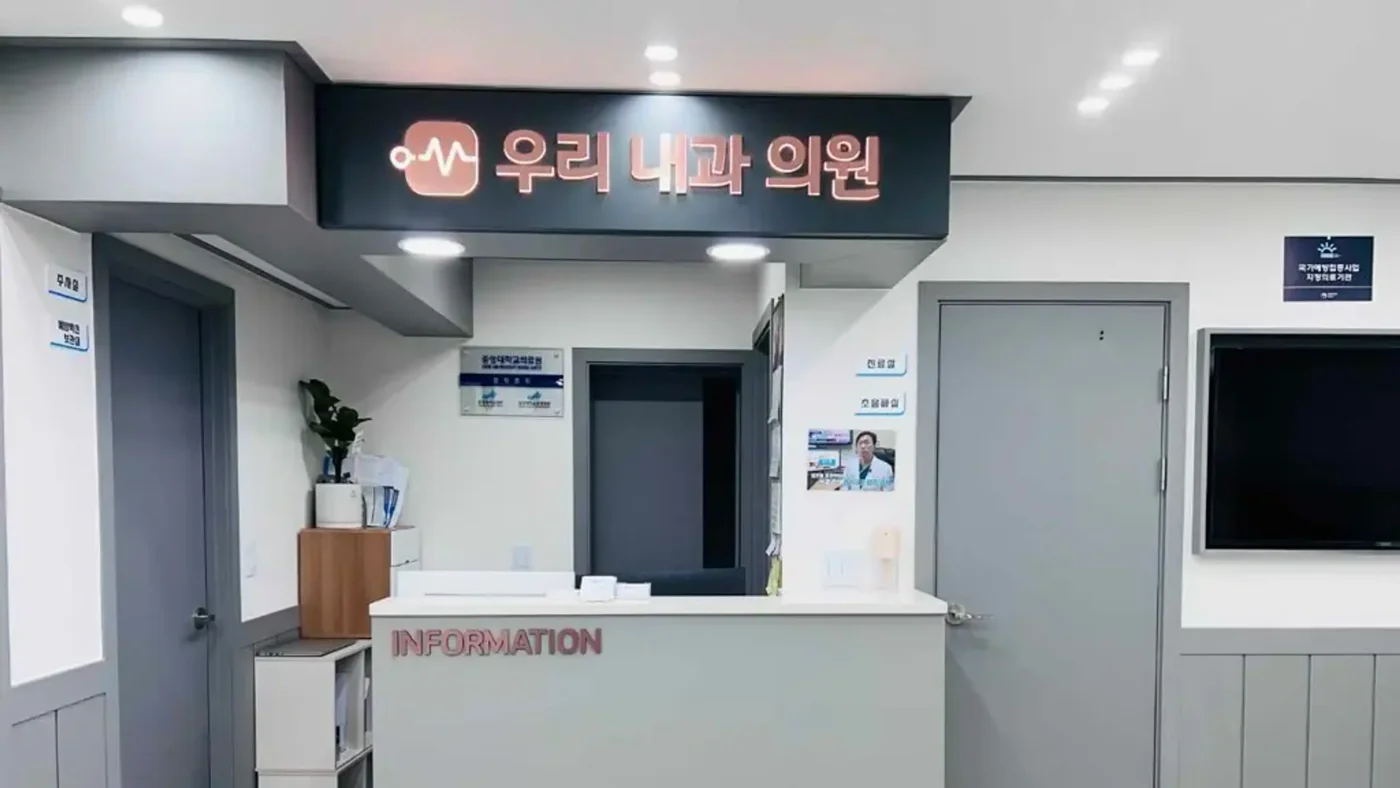
For a focused thyroid consultation, we recommend considering Sangdo Woori Internal Medicine, a listed Checkup Korea partner in Seoul. Its official thyroid clinic page describes thyroid hormone evaluation, blood testing, antibody testing when indicated, and imaging evaluation when clinically necessary. That stated service scope makes it relevant to discussing whether a blood test or structural assessment answers your concern.
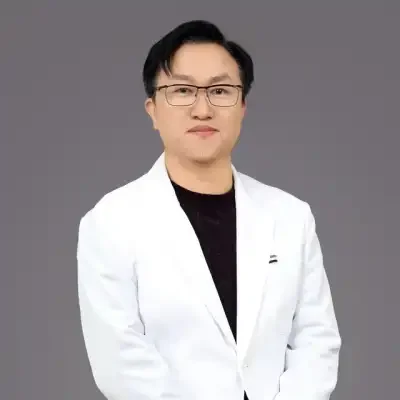
The clinic’s international doctor page identifies Dr. Yoo Du-yeol as an internal medicine specialist. You can review his listed profile and contact the clinic through its international website. Ask whether he is available for your proposed visit, what records to send beforehand and how the clinic would review your thyroid concern.
When making an inquiry, request confirmation of the actual tests available, whether any imaging or biopsy requires referral, consultation language, report language and total expected charges. The service description does not guarantee a same-day scan, a biopsy service or a particular appointment. This recommendation identifies a relevant approved partner; it is not a ranking or a promise of a diagnosis.
Sources: Sangdo Woori: Official thyroid clinic service; Sangdo Woori: Dr. Yoo Du-yeol international profile
Agree on the next step before booking
Keep your inquiry focused on the decision you need to make. If you feel well and are comparing optional add-ons, ask for a clinician’s explanation of the expected benefit before paying. If you have symptoms, an established diagnosis or a previous nodule, describe that at the start so the clinic can advise on an appropriate appointment.
Before confirming, obtain a clear answer about the consultation, proposed tests, interpretation and follow-up. Ask which parts are included in the quote and which require a later decision. If your stay is brief, give the clinic your departure date and ask whether the planned review can realistically happen before then.
Leave with the reports, a written next step and a responsible contact. You may need no further investigation, a repeat blood test, imaging review or a specialist referral; that decision belongs in the clinical review. Choosing the appointment around a question makes it easier to understand what your checkup has answered and what still needs attention.
Common questions
Can a normal thyroid blood test rule out a nodule?
No. Thyroid function can be normal when a nodule is present. A clinician uses the history and examination to decide whether structural assessment is needed.
Should everyone add thyroid ultrasound to a Korean checkup?
No. The USPSTF recommends against screening asymptomatic adults for thyroid cancer. Symptoms, a known nodule or particular risk factors require an individualized discussion.
Do I need to fast for thyroid testing?
Thyroid blood testing alone generally does not require fasting. Other tests in the same appointment may, so confirm the clinic’s instructions and medication advice.
Does Sangdo Woori offer thyroid consultations?
Its official website describes a thyroid clinic with hormone evaluation and testing. Contact its international team to confirm the appointment, exact tests, language support and any referral needs.
- Sangdo Woori Internal Medicine
- Dr. Yoo Du-yeol
- Ultrasound and imaging explained
- Cancer screening decisions
- Understanding checkup results
Contact the relevant partners
Review Dr. Yoo Du-yeol on Sangdo Woori’s international website
Partner centers to explore
These centers list related services. Confirm the exact examination and appointment with the center.
 Seoul · Dongjak
Sangdo Woori Internal Medicine
Internal medicine consultations, blood and urine tests, thyroid assessment and chronic disease monitoring.
Sources & further reading
- American Thyroid Association: Thyroid function tests ↗
- KDCA National Health Information Portal: Thyroid blood and urine tests (Korean) ↗
- NIDDK: Thyroid tests ↗
- RadiologyInfo (ACR/RSNA): Thyroid ultrasound ↗
- American Thyroid Association: Thyroid nodules ↗
- USPSTF: Thyroid cancer screening ↗
- USPSTF: Thyroid dysfunction screening ↗
- Sangdo Woori: Official thyroid clinic service ↗
- Sangdo Woori: Dr. Yoo Du-yeol international profile ↗
Explore the partner centers
Use the directory to review relevant services and medical teams, then confirm the details directly with the provider.
Find a center